
Care Instructions
Care Instructions for Natural Stone and Architectural Surfaces
Expert guidance for daily and routine care of marble, limestone, travertine, granite, quartzite, grout in existing tile installations, and protected surfaces. Written by The Beautiful Stone Company.
Universal Care Rules
- Always test cleaners in an inconspicuous area before broad application.
- Avoid acidic cleaners on acid-sensitive stones (marble, limestone, travertine, onyx).
- Routine care is still required even for sealed or RAKU-protected surfaces.
- For unusual damage, contact a stone-care professional before experimenting with harsh products.
- When in doubt, use pH-neutral cleaner and warm water.
By Stone Type
Stone-Specific Care Instructions
Marble — What to Do
- Use pH-neutral stone cleaner only
- Wipe spills immediately, especially acidic substances
- Use trivets for hot items
- Use coasters for beverages
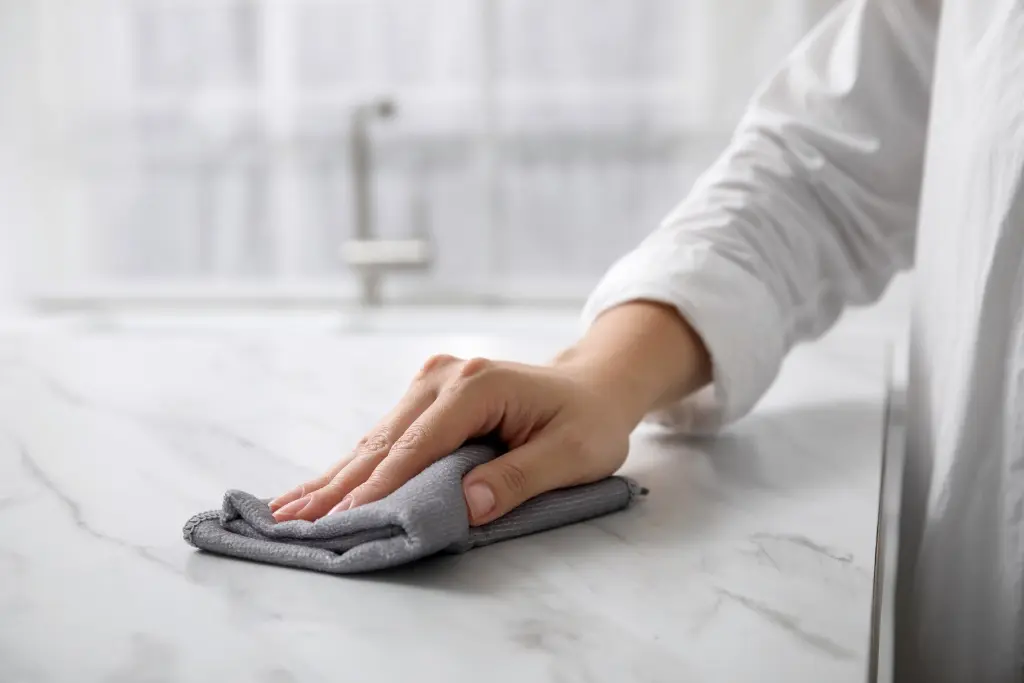
- Dust with a dry or slightly damp microfiber cloth
- Schedule professional resealing every 1–2 years
Marble — What to Avoid
- Acidic cleaners (vinegar, citrus, bleach-based)
- Abrasive cleaners or scrubbing pads
- Windex or ammonia-based glass cleaners
- Leaving acidic liquids on the surface
- Dragging items across the surface
Special Surface Care
Surface-Specific Care Instructions
RAKU-Protected Surfaces
For daily cleaning, use a pH-neutral stone cleaner (such as Lantania SANIMAR) — spray lightly and wipe with a soft microfiber cloth. For fingerprints, grease, or food residue, use an alkaline cleaner followed by pH-neutral cleaner. Wipe spills promptly; RAKU protects against etching from lemon juice, wine, and coffee, but avoid letting strong dyes (turmeric, beet juice) or heavy oils sit on the surface. Always use trivets under cookware exceeding 300°C / 600°F, and use cutting boards — RAKU is scratch-resistant but not scratch-proof. No resealing or waxing is required. Avoid vinegar, bleach, ammonia, citrus-based products, abrasive pads, steam cleaners, and harsh chemicals such as acetone or paint thinners.
Download Care Guide (PDF)STAIN-PROOF® Sealed Surfaces
Sealing makes surfaces stain-resistant, not dirt-resistant — regular cleaning is still required. Sweep or vacuum regularly to remove abrasive grit. Mop weekly with STAIN-PROOF Daily Floor Cleaner; change mop water frequently. For countertops, use STAIN-PROOF Daily Countertop Cleaner weekly. Mop up spills immediately — acidic substances (wine, citrus, cola) can still etch calcium-based stone such as marble, limestone, and travertine. Scrub surfaces every six months with STAIN-PROOF SMC Peroxide Cleaner. Penetrating sealers do not prevent acid etching — follow standard marble care guidelines for acid-sensitive stone.
Download Care Guide (PDF)Stone Showers
Squeegee stone after every use to minimize mineral deposits. Use a pH-neutral, stone-safe cleaner — avoid grout cleaners or acidic shower sprays on stone. Ensure proper ventilation. Schedule professional deep cleaning and resealing periodically.
Stone Countertops
Use trivets and cutting boards. Never cut directly on stone. Use coasters under glasses and bottles. Wipe spills immediately, especially wine, citrus, coffee, and vinegar. Clean with pH-neutral stone cleaner.
Stone Floors
Use walk-off mats at entrances to reduce tracked-in grit. Sweep or vacuum regularly to reduce abrasion from small particles. Clean with pH-neutral stone cleaner using a damp (not wet) mop. Avoid steam mops on marble, limestone, and travertine.
Emergency Spill Guidance
Do not scrub. Blot gently with a clean cloth. Rinse the area with plain water and blot dry. If an etch or stain appears, do not attempt DIY repair with harsh products — contact a professional for evaluation.
Ready to Begin
Let's Protect What You've Invested In
Whether you need restoration, protection, or a long-term maintenance plan — we're here to help with clarity, precision, and a calm service experience.